


CNC vs Injection Molding: Which Fits Your Project?
May 8
4 min read
In modern product development and manufacturing, CNC machining and injection molding are two of the most widely used and important production methods.
Whether you are an industrial designer, engineer, or sourcing manager, you will face a key question during the journey from concept to mass production: Should I choose CNC machining or injection molding?
This guide, CNC machining vs injection molding, will help you understand the differences from multiple angles, including process, cost, lead time, precision, applications, and real-world practices.
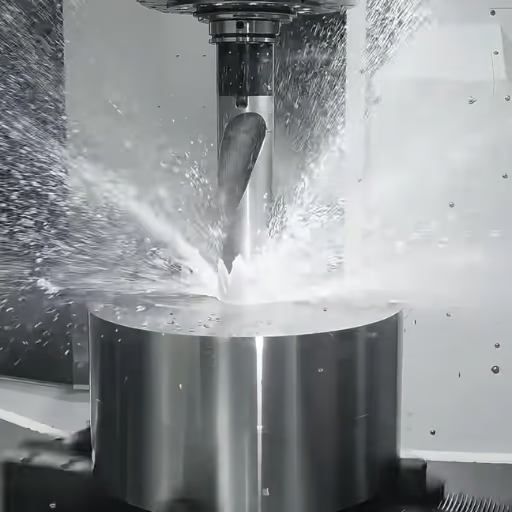
1. What Is CNC Machining?
CNC machining (Computer Numerical Control machining) is a subtractive manufacturing process. It uses computer-controlled tools to remove material from metal or plastic blocks to create precise parts.
Its core advantages are: high precision, flexibility, and no need for molds.
Key Features of CNC Machining:
· Very high accuracy (typically up to ±0.01 mm)
· No mold required → low upfront cost
· Capable of producing complex geometries
· Wide range of materials (aluminum, stainless steel, brass, ABS, POM, etc.)
· Ideal for small batches and fast iterations
Common Applications:
· Functional prototypes
· Engineering validation parts (EVT/DVT stages)
· Precision mechanical components
· Low-volume custom parts
· Medical and aerospace components
CNC machining is one of the most reliable ways to validate designs in early product development.
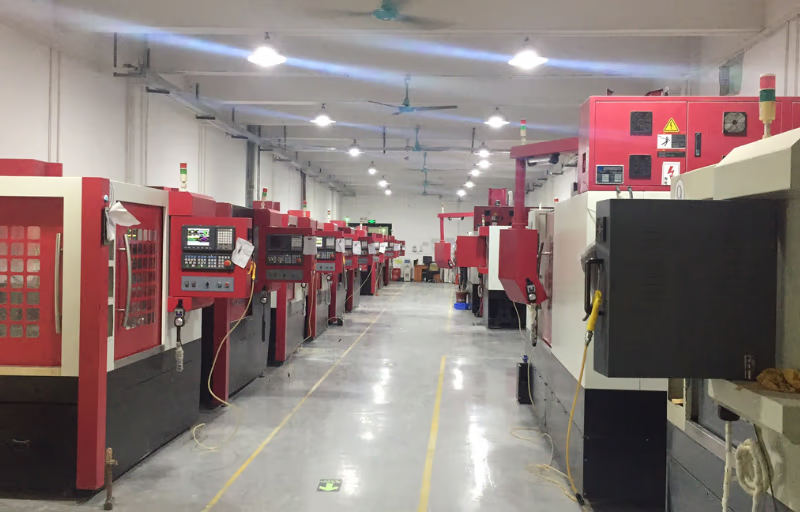
2. What Is Injection Molding?
Injection molding is a mass production process where molten plastic is injected into a high-precision steel mold. After cooling, it forms the final product.
Its core advantages are: high efficiency, low unit cost, and scalability.
Key Features of Injection Molding:
· Extremely low cost per part (for high volumes)
· Consistent surface quality and repeatability
· Supports complex shapes and snap-fit designs
· Longer tooling lead time
· Higher upfront investment (mold cost)
Common Applications:
· Consumer electronics housings (phones, earbuds, smart devices)
· Automotive interior and exterior parts
· Home appliance components
· Medical plastic parts
· Industrial plastic products
Injection molding is best for products that have completed validation and are ready for mass production.


3. CNC Machining vs. Injection Molding: Key Comparison
Aspect | CNC Machining | Injection Molding |
Process Type | Subtractive | Forming |
Upfront Cost | Low (no mold) | High (tooling required) |
Unit Cost | Higher | Very low at scale |
Lead Time | Fast (1–7 days) | Slower (2–5 weeks for tooling) |
Minimum Order | From 1 piece | Usually 1000+ units |
Materials | Metals + engineering plastics | Mainly plastics |
Design Changes | Very flexible | Costly to modify |
Depends on post-processing | Determined by mold | |
Best Stage | Prototype & low volume | |
Tolerance range | ±0.01mm to ±0.1mm | ±0.1mm to ±0.3mm reference to ISO20457 |

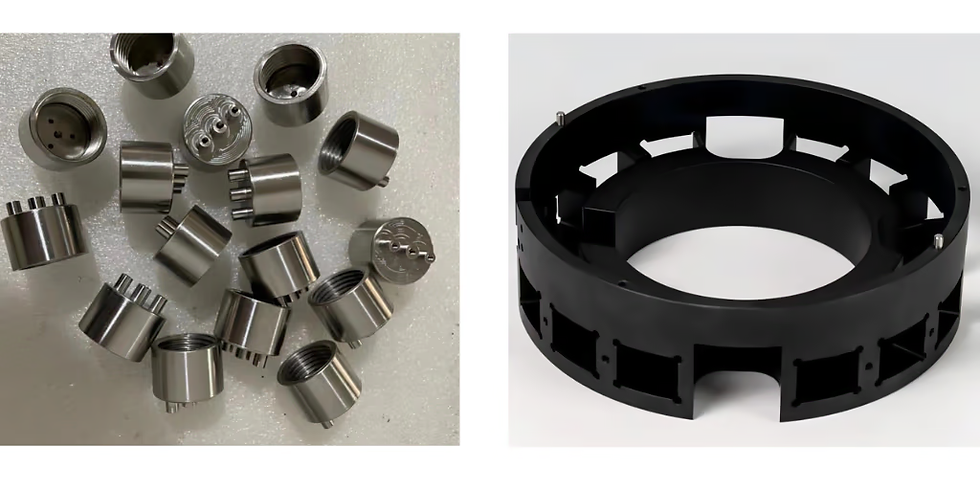
CNC-Machined Parts
4. Cost Breakdown: The Key Decision Factor
A common question is: At what volume does injection molding become cheaper than CNC?
CNC Machining Cost Includes:
· Raw material (metal or plastic)
· Machining time
· Programming and setup
· Post-processing (anodizing, sandblasting, polishing)
Advantage: No tooling cost = low risk for trial and error
Injection Molding Cost Includes:
· Mold design and manufacturing ($1,000–$10,000+)
· Very low per-part production cost
· Maintenance and mold modification
Advantage: Best for long-term, high-volume production
Critical Break-Even Point:
In general, when production exceeds 1000 units, injection molding becomes more cost-effective.
However, this depends on:
· Part complexity
· Material selection
· Product lifecycle
· Design stability
5. How to Choose the Right Process
Choose CNC Machining if:
· Your product is still in the design validation stage
· You need fast iterations and frequent changes
· You require low-volume production (1–200 pcs)
· You need metal or engineering plastic parts
· Time-to-market is critical
Core value: speed + flexibility + risk control
Choose Injection Molding if:
· Your design is finalized
· You are entering mass production
· You need to reduce unit cost
· Annual volume is high
· The product is mainly plastic
Core value: cost efficiency + consistency + scalability
6. Best Practice in Real Projects
In many US and European product development workflows, companies follow a hybrid strategy:
Step 1: CNC Prototyping: Validate design, structure, and function
Step 2: Low-Volume Production (CNC or soft tooling): Test the market and gather feedback
Step 3: Injection Molding: Move to full-scale production
This staged approach significantly reduces product development risk.
7. Common Misconceptions
❌ Myth 1: Injection molding is always cheaper
✔ Only true for large production volumes
❌ Myth 2: CNC can only make simple parts
✔ CNC can produce highly complex 3D geometries
❌ Myth 3: Making molds early saves time
✔ It can lead to costly redesigns and delays
❌ Myth 4: These processes cannot be combined
✔ In reality, they complement each other in different stages
8. Future Trend: Hybrid Manufacturing
As product development cycles become shorter, relying on a single process is no longer enough.
Emerging trends include:
· CNC + 3D printing + injection molding integration
· Rapid tooling
· Flexible low-volume manufacturing
The focus is shifting from single cost optimization to full lifecycle optimization.


9. Conclusion
In simple terms:
· CNC Machining is flexible, fast, and ideal for development
· Injection Molding is stable, cost-efficient, and ideal for mass production
If your product is still in development, CNC is the safest choice. If your product is mature, injection molding is the best way to reduce costs.
Contact SG PROTO for expert guidance in choosing between CNC machining and injection molding to support your product development.
Comments