


Plastic Drying Guide for Injection Molding
Sep 20
4 min read

Proper material drying is an important step in achieving consistent injection molding quality. However, not all plastics require the same level of drying.
Understanding the moisture sensitivity of each material helps prevent common molding defects and keeps the production process stable.
Common Injection Molding Materials
Material | Key Properties | Typical Uses |
PP | Lightweight, good fatigue and chemical resistance, easy to spray-coat | Housewares, reusable containers |
ABS | Good surface finish, tough, easy to spray-coat | Enclosures, casings |
PC | Transparent, high impact resistance, good heat resistance | Clear covers, functional parts |
PA (Nylon) | High strength, wear-resistant, dimensionally stable — but highly hygroscopic | Gears, structural parts |
POM | High rigidity, low friction, dimensionally stable | Precision moving parts |
PET | Transparent, good barrier properties, needs drying | Packaging |
Material selection is not based on a single property. Engineers usually need to balance mechanical performance, heat and chemical resistance, appearance, cost, processability, and moisture sensitivity.
Among these factors, moisture control is often overlooked during prototyping and production, yet it can have a major impact on both part quality and material performance.

Why Drying Matters
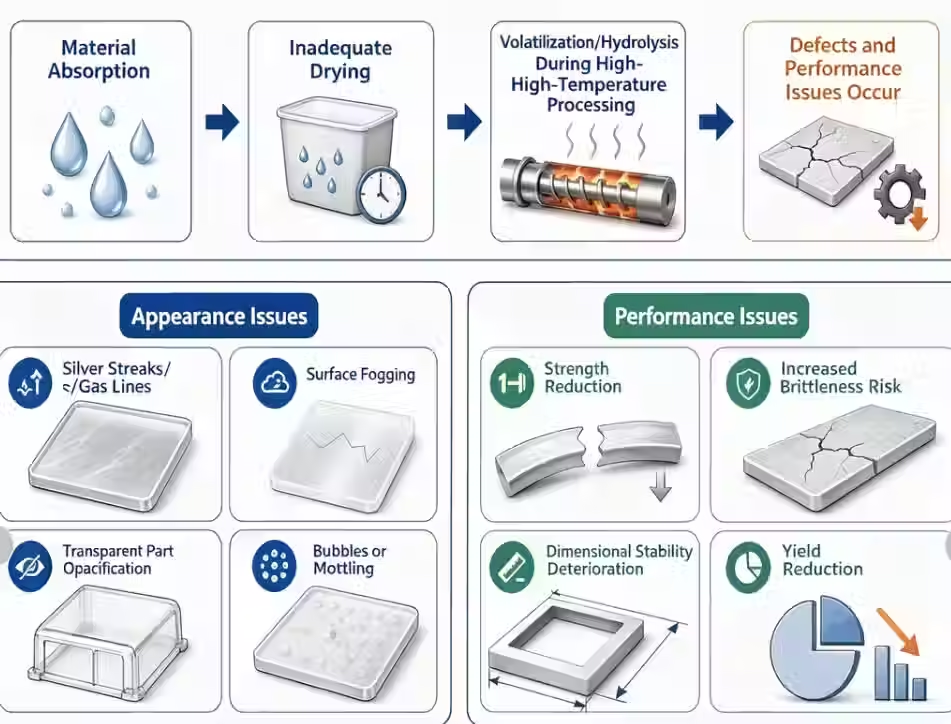
Plastic pellets absorb moisture from the air during storage and transport. When resin with high moisture content enters the barrel, that moisture flashes to steam at melt temperature. The result can be Silver streaks, bubbles, surface haze, reduced clarity, material degradation, and lower part strength. For hygroscopic engineering resins, moisture doesn't just affect appearance — it can change the material's mechanical properties too.
Material Categories and Drying Parameters
Injection molding materials can generally be divided into two groups based on their moisture sensitivity.
Low moisture sensitivity: PP, PE, POM, and PS. These materials normally do not require the same level of pre-drying as PA or PC. However, drying may still be necessary after long-term exposure to humid conditions or improper storage after opening the packaging.
High moisture sensitivity: PA, PC, PET, PBT, ABS, and PC/ABS blends, and other modified engineering plastics. These materials generally require controlled drying before injection molding.
The numbers below are general reference ranges — actual requirements vary by grade, filler content, and additives, so always check the supplier's TDS (technical data sheet) for production:
Material | Drying Temp | Drying Time | Drying Requirement |
PP | 40–80°C (if needed) | 2–3 hrs | Low |
PE | Generally low | Per material spec | Low |
POM | 90–110°C | 2–3 hrs | Low–moderate |
ABS | 80–90°C | 2–3 hrs | Recommended |
PA6/PA66 | 80–100°C | 4–8 hrs | Strict |
PC | 110–120°C | 2–4 hrs | Strict |
PBT | 120–140°C | 3–4 hrs | Strict |
PET | ~120–160°C* | 2–5 hrs* | Strict |
*PET requirements vary significantly by grade — follow the supplier's TDS.
Higher temperature isn't always better. Over-drying at excessive temperatures can degrade the material or cause discoloration before it even reaches the barrel.
Material-Specific Considerations
PA (Nylon): Excessive moisture can cause silver streaks and bubbles and may reduce mechanical performance. A desiccant dryer is generally preferred over a conventional hot-air dryer for moisture-sensitive nylon grades.
PC: PC is highly sensitive to moisture. Insufficient drying can lead to silver streaks, bubbles, surface defects, and even material degradation. This is especially important for transparent parts, where any defect is far more visible.
PBT/PET: Both are hygroscopic polyesters. Moisture control affects not just appearance but hydrolytic degradation and mechanical performance during high-temperature processing. Grade-to-grade variation is significant, so follow the TDS closely.
ABS: Less hygroscopic than PA or PC, but still worth drying if it's been stored a long time or exposed to humid air after the bag is opened.
Drying Is Not Just About Temperature and Time
Temperature and drying time are important, but two other factors are often overlooked.
Dew point: For moisture-sensitive materials, the quality of the drying air matters.
A desiccant dryer removes moisture from the air and provides a low-dew-point environment for more effective drying. For engineering plastics such as PA, PC, PET, and PBT, controlling the dew point can be more important than simply increasing the drying temperature.
Storage after drying: Dried material left exposed to ambient air for too long will re-absorb moisture. Get it into the machine promptly, or store it in a sealed, dry environment until it's used.
Common Material Drying Mistakes
1. Using the same drying settings for every material. PP, ABS, PA, and PC have different moisture sensitivities. Using one set of drying parameters for all materials can result in insufficient drying or unnecessary heating.
2. Focusing on time while ignoring temperature. "Two hours in the dryer" doesn't guarantee dry material — the result also depends on starting moisture content, drying air quality, dew point, and batch size.
3. Re-absorbing moisture after drying. Even a correct drying cycle can be undone if the material sits out too long before molding.
4. Judging dryness by eye. Dried and undried pellets can look identical. For demanding parts, back up visual inspection with TDS specs and actual moisture testing.
5. Ignoring the material's TDS. Generic drying charts found online should only be used as a reference. Different grades, fillers, and modified formulations of the same material may have different drying requirements.

A Practical Guide to Plastic Drying for Injection Molding
A simple drying management process can help keep injection molding more consistent:
1. Identify the material, grade, and moisture sensitivity.
2. Check the TDS for recommended drying temperature, time, and allowable moisture content.
3. Choose the right drying equipment based on hygroscopicity (PA, PC, PET, PBT typically need desiccant drying).
4. Monitor and log temperature, time, and dew point.
5. Move dried material into production quickly, minimizing exposure to humid air
6. Watch for splay, bubbles, surface defects, haze, or unexpected strength issues in molded parts.
7. Log batch numbers, drying conditions, and molding parameters for traceability.
Need Help With Your Injection Molding Project?
Choosing the right material and controlling the molding process are both critical to part quality.
SG Proto provides one-stop support from material selection and DFM to injection mold design and injection molding production.
If you're developing a new plastic product, contact us for a project evaluation and injection molding solution.


Comments