


Silk PLA Prototypes: Achieving a Metallic Look Without Painting
Jun 17
4 min read
In prototype manufacturing, we often receive requests that sound surprisingly similar:
"Can you make it look like metal, but keep the budget low?"
For many appearance models, the goal isn't to create a fully functional part. The objective is to impress investors, present a concept to stakeholders, or evaluate the product's visual design before committing to expensive tooling.
Traditionally, creating a metallic-looking prototype meant additional processes such as sanding, priming, painting, or even electroplating. These finishing operations can produce excellent results, but they also add cost and lead time.
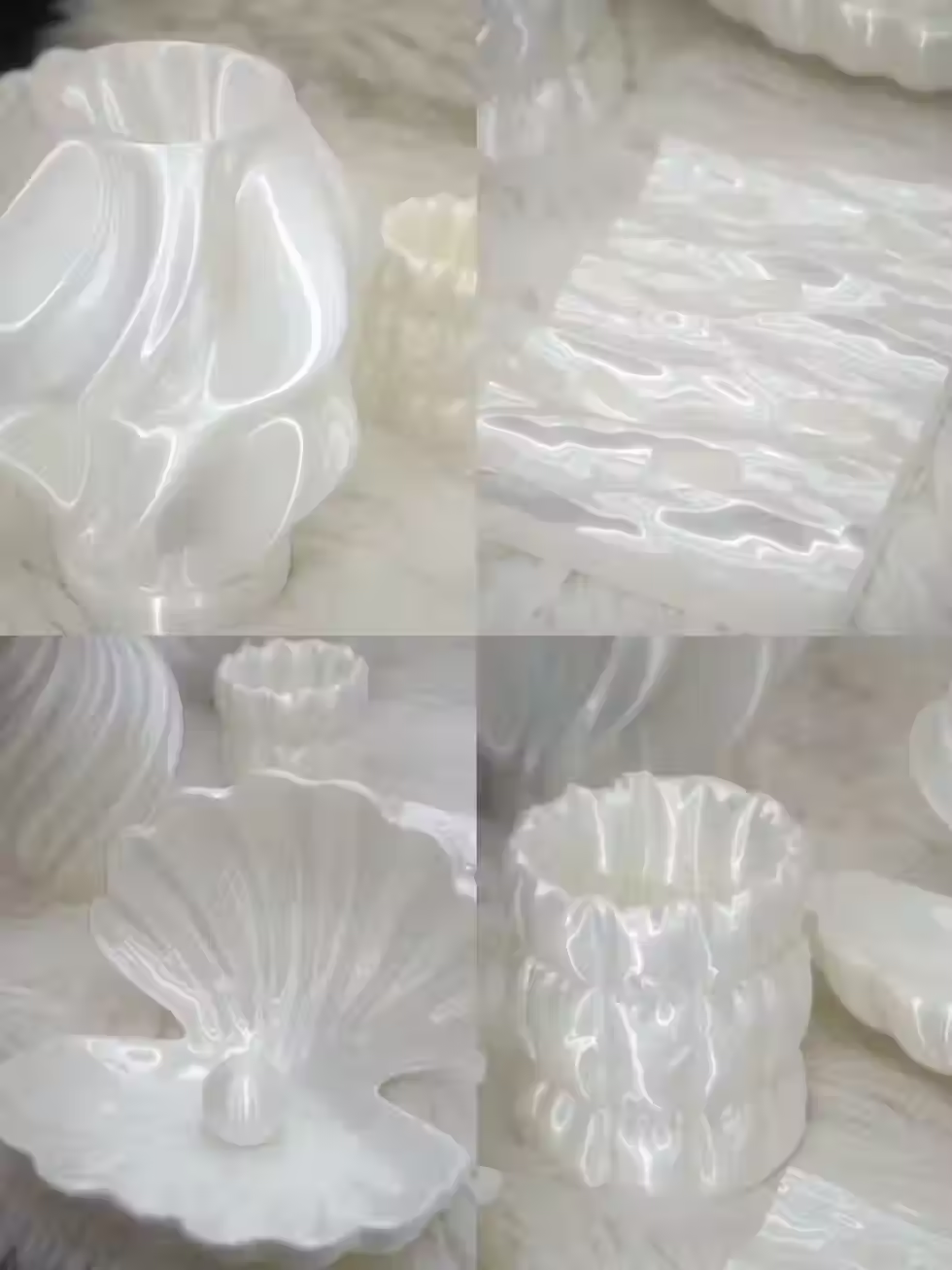
Over the past few years, Silk PLA has become one of our favorite materials for fast visual prototypes. With the right design and print settings, it can create a surprisingly premium appearance straight off the printer. Gold, silver, copper, and even dual-color Silk PLA filaments can mimic the look of painted parts without requiring any post-processing.
While Silk PLA won't replace CNC-machined aluminum or high-end painted prototypes, it fills an important gap between speed, cost, and appearance.
In this article, we'll share when Silk PLA makes sense, where it falls short, and how product designers can use it effectively during the early stages of development.

What Makes Silk PLA Different from Standard PLA?
At first glance, Silk PLA looks like ordinary PLA filament.
The difference becomes obvious once the first part comes off the printer.
Standard PLA typically produces a matte surface where layer lines are clearly visible under direct light. Silk PLA contains modified polymers that create a glossy, reflective finish. Instead of scattering light, the surface reflects it, giving parts a satin or metallic appearance.
This optical effect is what makes Silk PLA so attractive for presentation models.
In fact, we've had customers assume a silver Silk PLA enclosure was spray-painted until they examined it closely.
For industrial designers, that's often exactly the point.
The prototype doesn't need to behave like metal—it only needs to communicate the design intent effectively.

When Silk PLA Prototype Is the Right Choice
One mistake we occasionally see is using Silk PLA for projects that require mechanical validation.
That's not what this material is designed for.
Silk PLA performs best when appearance is more important than strength.
Some common applications include:
· Consumer electronics appearance models
· Smart home device housings
· Product launch mockups
· Exhibition samples
· Kickstarter presentation prototypes
· Concept models for investor meetings
· Toys and collectible figures
For example, when developing a new consumer electronic product, the design team may need three or four enclosure iterations within a week. Producing each version in CNC aluminum would significantly increase costs.
Printing those same housings in Silk PLA allows the team to review form, proportions, ergonomics, and visual appeal much earlier in the development cycle.


The Biggest Advantage: Eliminating Paint
From a manufacturing perspective, painting is often underestimated.
A painted prototype usually requires:
· Surface preparation
· Sanding
· Filler application
· Primer coating
· Color coating
· Drying time
· Quality inspection
Each step introduces additional labor, cost, and risk.
Silk PLA prototype simplifies the workflow considerably.
In many cases, a part can move directly from the printer to the customer's desk.
For projects with tight deadlines, eliminating even one day of finishing work can make a significant difference.
This is particularly valuable for startups preparing investor presentations or design agencies working toward client review meetings.

Where Silk PLA Falls Short
Despite its visual appearance, Silk PLA is not a universal solution.
Compared with standard PLA+, PETG, or engineering materials, it generally offers lower layer adhesion and reduced toughness.
We've also noticed that very glossy Silk PLA grades can become brittle when thin-wall sections are used.
For that reason, we rarely recommend it for:
· Snap-fit components
· Functional testing parts
· Mechanical assemblies
· High-temperature environments
If the prototype will be assembled repeatedly or subjected to load testing, materials such as ABS, Nylon, PETG, or CNC-machined plastics are usually better choices.
The key is matching the material to the purpose of the prototype.
Design Tips from Real Projects
After producing hundreds of FDM prototypes, we've learned that Silk PLA performs best when the design takes advantage of its visual characteristics.
Large smooth surfaces tend to look excellent.
Gentle curves, consumer-product-style housings, and decorative geometries often showcase the material's reflective finish beautifully.
On the other hand, heavily textured surfaces can reduce the silky effect.
Print orientation also matters.
A well-oriented part can make layer lines almost disappear, while a poor orientation may exaggerate surface imperfections.
When appearance is critical, spending a few extra minutes optimizing print orientation often delivers better results than hours of post-processing later.
Final Thoughts
Not every prototype needs CNC machining, painting, or expensive finishing.
Sometimes, the fastest path to a convincing appearance model is simply choosing the right material from the beginning.
Silk PLA offers a unique combination of speed, affordability, and visual impact. For industrial designers, startups, and product development teams, it provides an efficient way to transform digital concepts into presentation-ready prototypes within days rather than weeks.
If your next project requires a prototype that looks impressive without the cost and complexity of painting, Silk PLA may be one of the smartest options available.


Comments